
Haway the lads! UK trio Knats reach a whole new level with 45-minute follow-up.
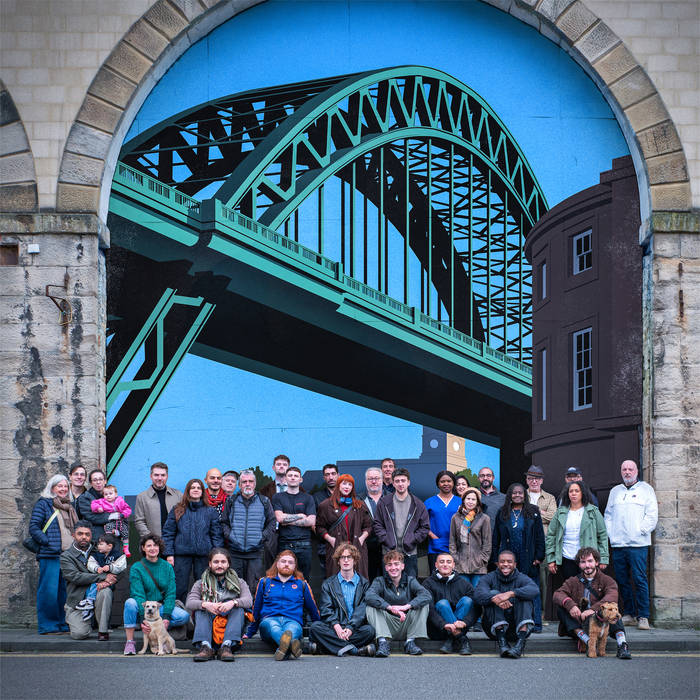
It can be said that with every new record, comes a new face to a band or collective. It’s a saying that is coming true when it comes to Knats. Led by two lifelong mates, Stan Woodward – on bass – and King David-Ike Elechi – on the tubs – the UK trio have been finely finessing their sounds after moving to the big smoke in late ’22.
A stoic portrait of the UK’s jazz scene and its strength, social commentary and groovy orchestration lead the charge of a Knats sound that can be hard to keep in its parameters. Last year was galvanised with their self-titled debut release to mass fanfares of success. It looks like 2026 will be more of the same.
A musical documentation of mass world-building, ‘A Great Day in Newcastle’ takes you through the North East working-class experience. But this time, the pair look to angle it with a far more darker flair than last. Through the twinge of that all encompassing Geordie accent, the sophomore record tackles substance abuse, crime and toxic masculinity through its 9-track runthrough. In a barrage of fast and frantic virtuosity, the album rarely takes breath as it builds a colourful neighbourhood; rife with community – but not without those all-too-familiar demons at the door.
But because of the whimsy that comes with that Northern camaraderie, it remains positively upbeat, for fear they may go down one of these paths they tread – and never come out.
With the addition of new member and poet Cooper Robson the newly refined quintet showcase a hardened edge to their identity. Eager to let loose but not unperturbed to bring far greater meaning to the melody – a setting of the scene fitting of any city-set film or drama I’ve seen.
A gritty sense of realism amongst a layered backdrop, the record also gives note to the working-class heroes. The un-sungs of our time who deserve every moment of thought; we all feel like we know them and this album has them in abundance. Pitmans, local boxers, town-criers, footballers.
Leading role ‘7 Bridges To Burn’ is one of the best demonstrations in how the working class world works I’ve certainly ever heard. Atop melancholic piano and pining strings, sits a weighted individual eager to leave the cruxes of the toon he’s found himself in – but feels oddly drawn to its charm, its pastiche. The fast, jittering blues of Carpet Doctor plays a narrative of a convict hard done by life who eager to rejoin society, is never fully accepted the same again.
A poetic sentiment to the pitman community, Wor Jackie plays homage to Newcastle football player Jackie Milburn, who was believed to have done half days in the pit and half on the football pitch. “Then bellows weeping fire burns cold / grafters enrolled upon cold flats / good men each worthy of blue plaques / wield a blunted pickaxe and poll tax / some live and some steal a living.” A fitting representation reflecting such a story, the reading is accompanied some of the most astounding solos on the record with Johnson’s tenor sax taking the limelight.
Whether it be the groups’ ode to Pickford’s folk song Farewell Johnny Miner or the captivating narrative on bluesy Carpet Doctor, every note and every anecdote is as artful and intriguing as the noir crime series it finds itself in. “What is this thing they call ‘working class solidarity?” Infrequent dissonance and beautiful jazz bar-esque solo quips make it such an enjoyable listen from day dot to end sequence.
My only gripe is that I wish it were longer. I’m simply hankering for more here.


Leave a Reply